Custom lapel pins have been in fashion since the mid-eighteen hundred. With its new popularity, custom pins quickly became a method by which an individual could distinguish herself. Increasing use over the years has resulted in a variety of accessories for the user's clothing.
Attaching:
Pins and pins: Initially, because women's pins were common, lapel pins were held in the same way. The ID button was at a right angle to the pin that pierced the flap and was hidden from view. Thus, the men's stick pin emerged, the button of which soon became a kind of identification for the user.
Tie Tacs: Since tie tacs were as popular with men as hat pins with women, the lapel pin accessory soon evolved to tie clothes together in the same way that tie tacs did. The button or nameplate was manufactured with a short pin welded to the reverse. The pin went through the fabric and was secured by a hidden clip. This type of attachment has evolved, so today the attachment is very secure and is probably the most commonly used attachment.
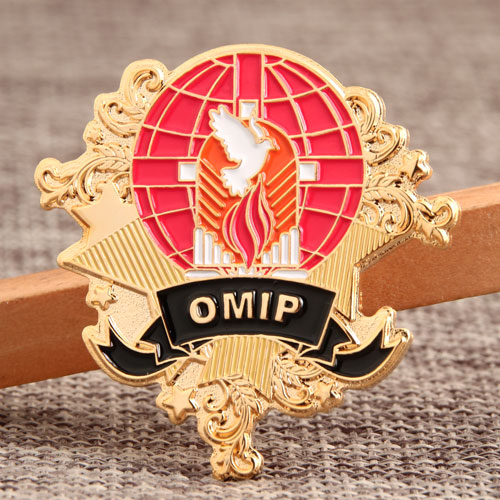
Magnets: Over the years, magnets have become an increasingly popular fastening method. Susceptible metals are magnetized, and the pin identification portion is magnetically secured through the fabric with another small magnet. The main advantage, of course, is that there is no need to puncture the fabric to secure the pin. However, there are several disadvantages. First, the flap pin must necessarily have a backing that can be magnetized, which can limit your selection options. Then, if the fabric on which the pin is to be used is too thick, the magnet may not hold as a magnetic field cannot be established.
Wearing
Lapel pins, buttons or badges are now a unisex item. While its use was once limited to men, it is now common to see women with pins of all custom made pins. Men still wear their more formal custom pins primarily on the lapel of their coat. Whether the occasion is less formal or not in a business setting, men often wear their pins attached to the collar of their shirts. Caps and vests have become a favorite home for custom pins that are not as formal. These pins are generally less expensive, not business related, and are used to recognize everything from sports teams, military service branches, to visited destinations and attractions.
Women are just as creative, if not more. They carry their custom pins anywhere, from the lapel of the jacket to the strap of the bag. Women's custom pins are often a fashion accessory when representing an organization or in recognition of exceptional service.
Today, for a wide population of men and women, the custom pin is an item that is part of an everyday wardrobe like the wristwatch. Whether worn in a business suit, wallet, or cap, the custom pin has become an element of personal distinction in our way of life.

No comments:
Post a Comment